Lee Sol Yi, the wife of director‑comedian Park Sung Kwang, has taken over Korean social media with a toilet paper roll and an impossibly tiny waist. In a short mirror video, she coolly takes on the “toilet paper challenge,” unwraps the roll, and reveals a jaw‑dropping result of just 4.5 sheets around her midsection—beating even the rumored “idol average” without breaking a sweat. Netizens instantly crowned Park “the man who must have saved a country in his past life,” turning a bathroom staple into Korea’s new beauty meter.
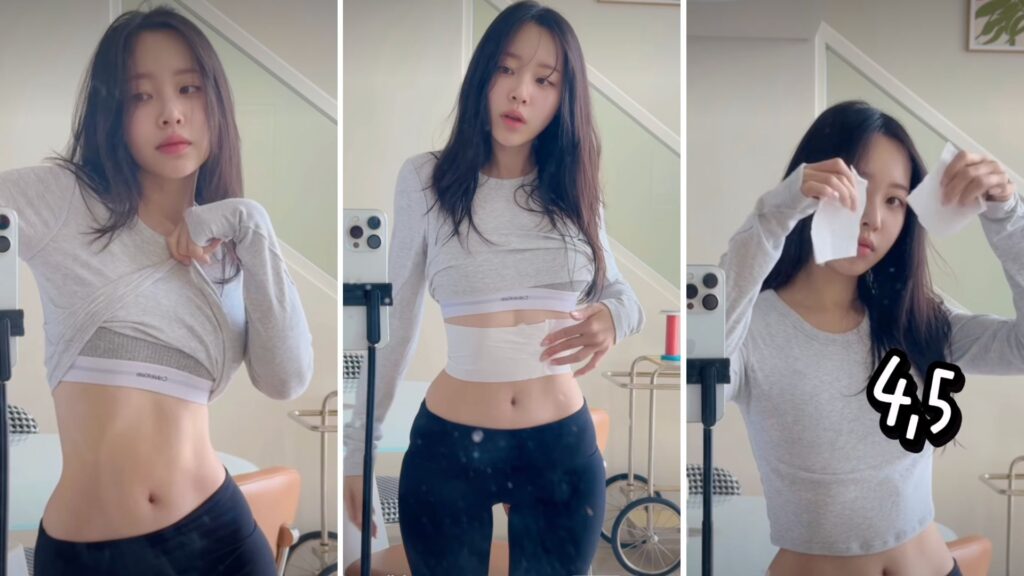
Table of Contents
The moment that made a toilet roll legendary
On February 15, Lee Sol Yi uploaded a short clip to social media, filming herself in front of a mirror in casual clothes. Without dramatic lighting or fancy editing, she wrapped a roll of toilet paper around her waist, like a DIY measuring tape straight out of the bathroom.
Text on the screen teased viewers with one line: “I heard the idol average is five sheets.” Then came the punchline—she unwrapped the roll and revealed the count: just 4.5 sheets to completely circle her waist, leaving viewers scrambling to pick their jaws off the floor.
Lee followed the reveal with a modest caption, “I made the average,” even though her result actually undercut the supposed idol benchmark. Far from being merely “average,” her 4.5‑sheet waist instantly became the new unofficial gold standard of extreme slimness.
My waist would need the whole roll
As the clip spread, the comments section turned into a mix of disbelief, admiration, and self‑roasting humor. Typical reactions included, “Can’t believe her waist is only 4.5 sheets,” and the now‑viral line, “Did Park Sung Kwang save the country in a past life?”—a classic Korean joke reserved for people considered ridiculously lucky.
Others tried to cope with comedy, with one viewer writing, “My waist probably needs a whole roll of toilet paper,” turning the challenge into a meme about ordinary bodies versus “celebrity physics.” Rather than pure hate, most reactions blended envy with resigned laughter, as if everyone collectively agreed that this was one trend they might watch but never pass.
A new twist on Korea’s “waist challenge” culture
Toilet paper might sound silly as a measuring tool, but the concept fits neatly into a long line of ultra‑visual body challenges in East Asia. Past crazes like the “A4 waist challenge”—where people tried to hide their midsections behind a vertical A4 sheet of paper—have been slammed by experts as promoting unrealistic and unhealthy thinness.
Other trends like the belly‑button, collarbone, and bikini‑bridge challenges sparked similar criticism for turning specific body proportions into pass‑or‑fail tests that exclude most people. The toilet paper challenge is cut from the same cloth, but the use of a household item and the meme‑friendly “segment count” give it a slightly more playful, less clinical edge.
Why Lee Sol Yi’s attempt hits differently
Part of what makes Lee Sol Yi’s 4.5‑sheet moment feel bigger than a random influencer stunt is her existing public image. She married comedian Park Sung Kwang in 2020, and the couple quickly became beloved through SBS’s Same Bed, Different Dreams 2 – You Are My Destiny, where they shared their daily married life with viewers.
Last year, Lee revealed she had battled gynecological cancer, undergoing surgery and chemotherapy, and explained that her illness was the reason the couple had not had children yet. Her honesty drew widespread sympathy and support, recasting her not just as a “pretty celebrity spouse,” but as someone who had walked through a major health crisis in public.
Recently, she also shared bikini photos on a boat and wrote that body shape is often “a battle of constitution,” arguing that people born with certain body types can’t easily be matched by those who just work out. Those comments sparked debate, with some readers appreciating her candor while others felt subtly alienated by the “born this way” framing. Against that backdrop, the toilet paper clip feels like another chapter in an ongoing, sometimes uncomfortable conversation about genetics, effort, and beauty standards.
The DIY “ant waist” statistic
Still, nothing captures that conversation quite like the raw number: 4.5 sheets. Korean outlets described Lee’s figure as an “ant waist,” a common phrase used to praise extremely slim midsections in the entertainment industry. By explicitly comparing herself to the five‑sheet “idol average,” then coming in below it, Lee effectively turned a throwaway challenge into an instant, easy‑to‑remember stat.
In earlier content posted to her personal channel, she had already shown herself doing simple “eye body” checks in the mirror, lifting a tight T‑shirt slightly and casually wrapping a short roll of tissue or toilet paper around her waist to show that there was “no belly fat.” Those earlier videos drew admiration, but none had the crystal‑clear, meme‑ready hook of “4.5 sheets versus 5.”
The Park Sung Kwang effect
And then there is Park Sung Kwang—comic, director, and now the unwitting face of male good fortune. Every time his wife goes viral for her looks or figure, comment sections fill up with variations of the same joke: “What did he do in his past life?” and “How many countries did Park Sung Kwang save?”
The couple’s appearances on Same Bed, Different Dreams 2 showed them bickering, laughing, and navigating marriage like any other pair, which only makes the gap between Park’s goofy on‑screen persona and his “legendary luck” in love funnier to viewers. Lee’s toilet paper triumph simply hands the internet another reason to revive that running gag, ensuring Park trends right alongside her.
Between empowerment and pressure
Not everyone will see the toilet paper challenge purely as light entertainment. Critics of past body challenges argue that any trend that hinges on being slimmer, narrower, or “fittable” into an arbitrary object inevitably increases pressure on those who do not match up.
Lee’s own commentary about “constitution” reinforces the idea that some people just win the genetic lottery, while others gain weight “exactly in proportion” to what they eat. For fans who already admire her, that may feel refreshingly honest; for more insecure viewers, it can land like a reminder that no matter how hard they work, they will never hit 4.5 sheets.
At the same time, the humorous, self‑deprecating tone of many comments—people joking that their waists would use an entire roll or two—suggests that a large segment of the audience is processing the clip as comedy rather than a strict standard to meet. That tension between aspiration and parody is exactly where much of today’s viral K‑culture content lives.
From bathroom shelf to beauty standard
Whether the toilet paper challenge becomes a sustained trend or fades after a few days, it has already given fans a new metric to obsess over, parody, or reject. Some influencers are likely to copy Lee’s video straight, proudly counting their own sheets on camera; others may deliberately fail in exaggerated ways, using multiple rolls to underline how absurd the whole thing is.
What is certain is that a basic household product—usually hidden in bathroom cabinets—has been promoted to the role of accidental beauty barometer, all because one celebrity spouse wrapped it around her waist at exactly the right moment.
Lee Sol Yi’s 4.5‑sheet toilet paper challenge clip is classic K‑entertainment in miniature: simple, visual, a bit absurd—and loaded with unspoken commentary about beauty, luck, and body standards. In less than a minute, she turned a roll of tissue into a measuring tool, sparked jokes that her husband must have “saved a country,” and reignited debate over genetics versus effort in looking fit. Whether audiences treat it as motivation, pressure, or pure meme fuel, one thing is certain: from now on, every roll on the bathroom shelf might look just a little more like a tape measure.koreaboo+5