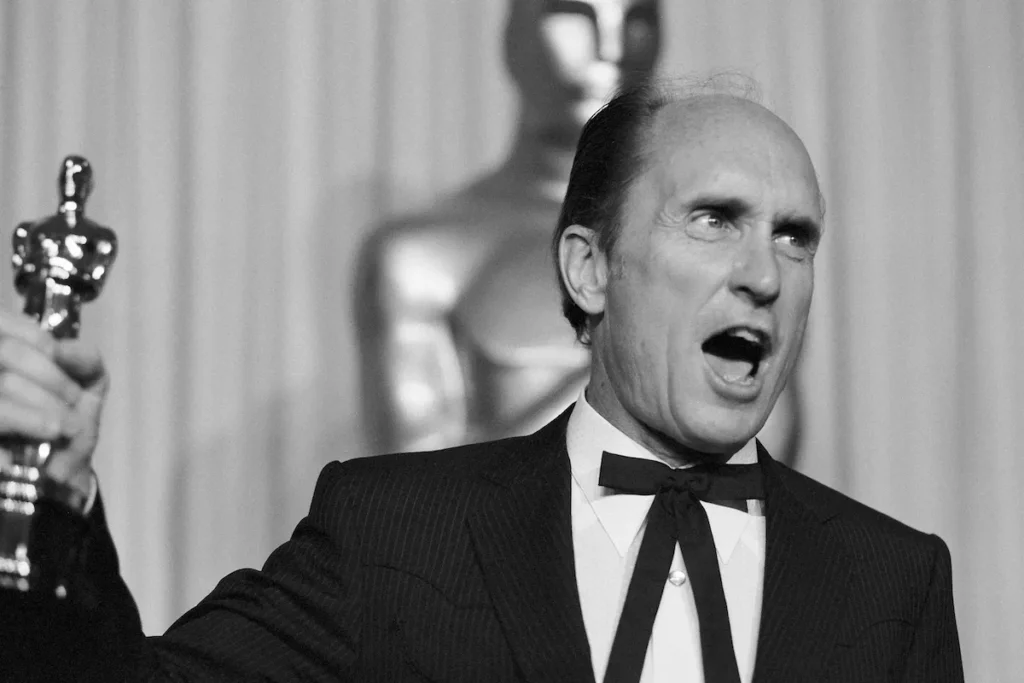

Robert Duvall, the Oscar-winning American actor whose seven-decade career made him one of the most revered and versatile performers in screen history, died Sunday at his home in Middleburg, Virginia, at the age of 95, his family announced. According to a statement shared on behalf of his wife, Luciana, Robert Duvall died peacefully at home, closing the curtain on a career that forever altered the texture of American film acting.
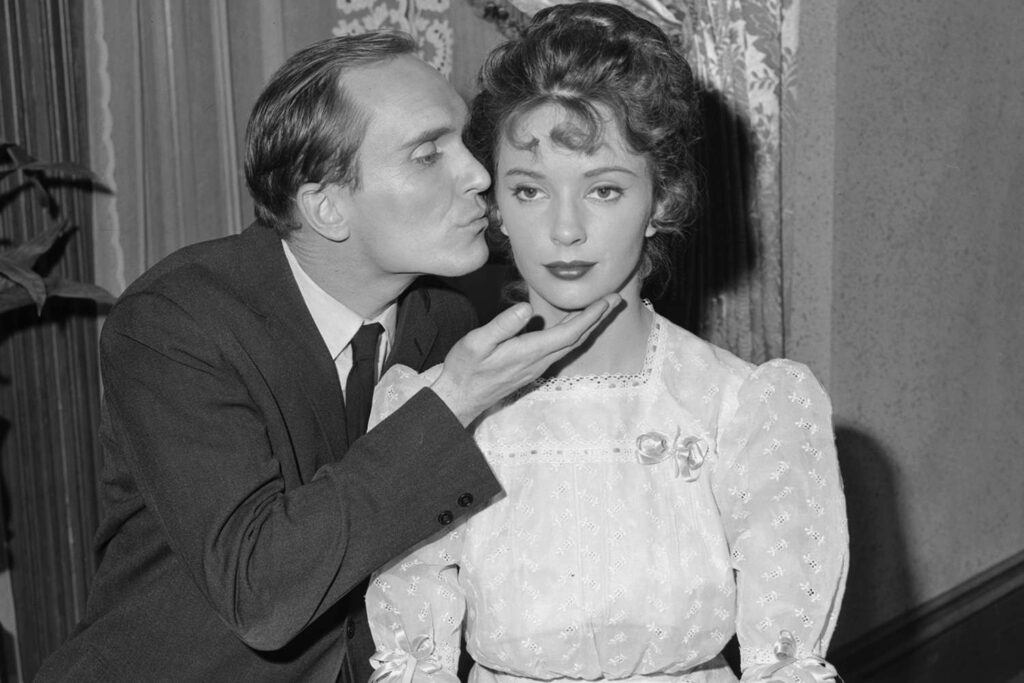
Best known to global audiences as the cool, calculating consigliere Tom Hagen in The Godfather and the fearless, surf-obsessed lieutenant colonel in Apocalypse Now, Robert Duvall built an unparalleled résumé that ranged from haunted recluses to grizzled cowboys, from hard-nosed generals to broken country singers. He won the Academy Award for Best Actor for the 1983 drama Tender Mercies and accumulated seven Oscar nominations over his long career, cementing his status as an “actor’s actor” who could disappear into almost any role.
Table of Contents
A quiet farewell to a roaring talent
In a message shared on social media, Luciana Pedraza Duvall described saying goodbye to her “beloved husband” and thanked fans for the outpouring of support, noting that he passed away “surrounded by love and comfort” at their Virginia home. The family said there would be no large public memorial at his request, instead encouraging admirers to honor him in simple, human ways — by watching a great film, trading stories with friends, or taking a drive to appreciate the world he loved to observe.
Tributes from across Hollywood and the global film community began pouring in within hours of the news, hailing Robert Duvall as a “legend,” a “chameleon” and, as one critic once put it, “the best we have.” His colleagues and collaborators frequently praised not just his technical precision but his fierce commitment to the emotional truth of every character he played, whether he appeared on screen for five minutes or carried an entire film.
From a Navy admiral’s son to Boo Radley
Robert Selden Duvall was born on January 5, 1931, in San Diego, California, the son of a U.S. Navy rear admiral and an amateur actress. Raised primarily in Annapolis, Maryland, near the U.S. Naval Academy, he grew up in a household shaped by military discipline but gravitated instead toward performance, later admitting that he was “terrible at everything but acting.”
After serving in the U.S. Army during the Korean War, Robert Duvall studied drama at Principia College in Illinois and then moved to New York, training under legendary acting teacher Sanford Meisner. In those early years he shared cramped living spaces and coffee with fellow strivers Dustin Hoffman and Gene Hackman, forming a trio that would later redefine American screen acting in the 1970s.
Robert Duvall made his feature film debut in 1962 as the mysterious recluse Boo Radley in To Kill a Mockingbird, a nearly silent performance that nevertheless became indelible to generations of viewers. The role, which came after significant work on stage and early television dramas, signaled a new kind of presence in Hollywood — an actor who could hold the audience with the slightest flicker of feeling.
North Korea vs South Korea: War of Content and Culture Acts
Building a new kind of American tough guy
Throughout the late 1960s and early 1970s, Duvall’s profile rose steadily as he appeared in films like Bullitt, True Grit, MASH*, THX 1138 and Joe Kidd, often playing damaged, difficult or morally ambiguous men. Working with directors such as Robert Altman, Francis Ford Coppola and George Lucas, he became a cornerstone of the “New Hollywood” movement, helping to usher in a grittier, more psychologically complex vision of masculinity on screen.
His breakthrough into mass cultural consciousness came as Tom Hagen, the soft-spoken Irish-German consigliere to the Corleone family in The Godfather (1972) and The Godfather Part II (1974). For that performance, he earned an Academy Award nomination for Best Supporting Actor, crafting a character who projected quiet intelligence and unshakeable loyalty instead of the typical gangster bravado.
Then, in 1979, Robert Duvall burned himself into cinema history as Lt. Col. Bill Kilgore in Apocalypse Now, the swaggering cavalry officer whose obsession with surfing in the middle of a war zone produced one of film’s most quoted lines about loving the smell of napalm at daybreak. With limited screen time, he created a figure at once horrifying and darkly charismatic, a performance critics still cite as a masterclass in how to dominate a movie without ever being its nominal star.
The long road to Oscar gold
Despite his growing reputation, Robert Duvall did not win an Academy Award until Tender Mercies, released in 1983. In that quiet, aching drama, he played a washed-up, alcoholic country singer seeking redemption in the Texas flatlands, a role tailor-made for his ability to convey oceans of feeling beneath a guarded surface. The performance earned him the Oscar for Best Actor and, by his own account, some of his proudest praise—from country music legends who told him he’d captured the soul of their world.
Over the years he amassed a total of seven Academy Award nominations, spanning films such as The Godfather, Apocalypse Now, The Great Santini, The Apostle, A Civil Action and The Judge. His final nomination, for Best Supporting Actor in The Judge (2014), made him the oldest male performer ever nominated in that category at the time, underscoring his staying power in an industry often unkind to aging stars.
Television also provided some of his most beloved work, none more so than his portrayal of Gus McCrae, the philosophical Texas Ranger-turned-cattleman in the 1989 miniseries Lonesome Dove, a role Robert Duvall frequently called his personal favorite. He later earned two Primetime Emmy Awards for the western miniseries Broken Trail in 2006, further cementing his dominance across mediums.
A restless storyteller behind the camera
Robert Duvall was not content to remain only in front of the camera. In 1983 he wrote and directed Angelo, My Love, a drama set in New York’s Roma community, signaling his fascination with subcultures and moral outsiders.
His passion project, however, was The Apostle (1997), a Southern religious drama that he wrote, directed, produced and starred in, financing much of the film himself. As an intense Pentecostal preacher on the run, he delivered one of his most complex performances, earning another Oscar nomination and widespread critical acclaim for his unflinching portrayal of faith, sin and self-delusion.
He returned to the director’s chair for Assassination Tango (2002), which drew on his love of Argentine tango, and later Wild Horses (2015), a modern western. Even when these projects were smaller or more idiosyncratic, they revealed an artist perpetually testing the boundaries of what stories mainstream cinema could tell.
Working until the lights went down
Far from fading into genteel retirement, Duvall remained in demand well into his 80s. He turned up as a stern cattleman in Open Range, a weary ex-recruiter in Crazy Heart, a mysterious recluse in Get Low, and a sharp-tongued patriarch in The Judge, among numerous other late-career appearances.
He also embraced a surprising range of genres, from big-budget thrillers and apocalyptic dramas to sports films and crime stories, appearing in titles like Deep Impact, Gone in 60 Seconds, We Own the Night, A Shot at Glory and even the basketball drama Hustle in 2022. His presence, even in supporting parts, gave films a certain weight; casting Robert Duvall was shorthand for signaling that a movie intended to be taken seriously.
A legend remembered in close-up
Away from the set, Duvall cultivated a life that mixed rustic simplicity with cosmopolitan tastes, dividing time between his Virginia ranch and international travels, particularly to Argentina, whose culture and dance he adored. Friends and family have described a man who relished long dinners, spirited conversations and “holding court,” a phrase that appears again and again in remembrances of his company.
In her farewell, Luciana Pedraza emphasized that for all the awards and accolades, Duvall’s greatest commitment was to the human beings he created on screen—their flaws, their humor, their flashes of grace. That dedication, echoed by critics who routinely ranked him among the finest actors of his generation, ensured that his work would outlive the box-office cycles and award seasons that first framed it.
Robert Duvall is survived by Luciana, his wife and creative partner, and by a towering body of work that stretches from the black-and-white world of To Kill a Mockingbird to the high-definition streaming age. For audiences, the invitation his family has extended is simple: press play, watch him once more step into someone else’s skin, and remember how one quiet man helped reinvent the art of acting for the modern screen.